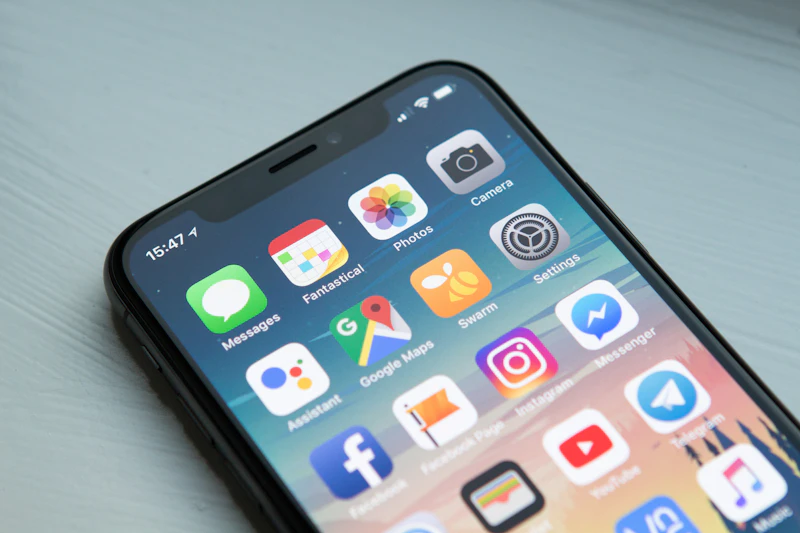
How Much Does It Cost to Build a Mobile App in 2026? A Complete Pricing Guide
The real cost of building a mobile app in 2026: accurate ranges by app type and platform, regional rate comparisons, hidden costs most teams miss, and proven ways to reduce your budget.
“How much does it cost to build a mobile app?” is the first question almost every founder asks, and it is the hardest one to answer with a single number. A two-screen prototype costs a few thousand dollars. A banking app with real-time fraud detection costs seven figures. Both are “mobile apps.” The gap is scope, not greed.
In this guide we break down realistic 2026 pricing by app type, platform, and development region, then cover the hidden costs most teams discover only after launch. You will leave with a defensible budget range and the questions to ask any development partner before signing.
We have built dozens of mobile products at DiVentra Labs, from founder MVPs to enterprise platforms serving millions of users. The numbers below are grounded in real project data, not agency marketing.
Why Mobile App Costs Vary So Much
Three variables drive almost all of the difference between a $15,000 app and a $200,000 app.
- Scope: how many screens, features, roles, and integrations your product needs.
- Platform: one native platform, two native platforms, or a single cross-platform codebase.
- Team: where your developers sit, their seniority, and how the engagement is structured.
A common mistake is pricing the app before defining the product. Cost estimates are only meaningful relative to a clear feature list, user flows, and technical requirements. Every feature you add multiplies design, development, and testing effort, so the cheapest way to control cost is to control scope.
App Development Cost by App Type in 2026
| App type | Typical range | Examples |
|---|---|---|
| Simple app or prototype | $15,000 – $30,000 | Informational app, basic utility, single-function MVP |
| Standard business app | $30,000 – $80,000 | Booking, marketplace-lite, membership, e-commerce |
| Data-heavy or feature-rich app | $80,000 – $200,000 | Real-time sync, complex admin dashboards, payments at scale |
| Enterprise platform app | $200,000+ | Banking, logistics fleets, healthcare, multi-tenant SaaS |
These ranges assume a professional team, clean design, automated testing, and a deployable release. Cut corners on any of those and you save money now but pay more in rebuilds later. It is common for apps built on the cheap to be rewritten within 18 months at a higher cost than the original build.
Native vs Cross-Platform: What It Actually Costs
Your platform choice is the second biggest cost driver. Building for both iOS and Android doubles the platform-specific work unless you use a cross-platform framework.
Native iOS or Android
A single native app costs roughly 30 to 40 percent less than building two native apps, but you reach only one store. Native development gives you the best performance, the deepest access to platform APIs, and the smoothest experience for graphics-heavy or hardware-intensive apps. Swift and Kotlin expertise also commands premium rates.
Cross-Platform (Flutter / React Native)
Flutter and React Native let one team ship one codebase to both platforms, cutting cost by roughly 30 to 40 percent versus two native builds. For most business apps, users cannot tell the difference, and the faster, cheaper path to both stores is the smarter business decision. Native only becomes clearly better when you need tight platform integration or maximum frame rate for games and camera-heavy features.
| Approach | Relative cost | Best for |
|---|---|---|
| Native (one platform) | 1.0x | Deep platform features, best performance |
| Native (both platforms) | 1.7–2.0x | Both stores, maximum quality |
| Cross-platform (Flutter/RN) | 1.3–1.5x | Both stores, one team, lower cost |
How Development Region Changes the Price
Hourly rates vary enormously by region, and this is where many founders save the most money without sacrificing quality, provided they manage the process properly.
| Region | Hourly rate | Relative cost |
|---|---|---|
| United States / Canada | $100 – $200 | Highest |
| Western Europe | $80 – $150 | High |
| Eastern Europe | $40 – $80 | Mid |
| India | $20 – $60 | Best value for senior talent |
| Southeast Asia | $20 – $50 | Value |
A standard business app that costs $70,000 to $120,000 with a US agency typically costs $28,000 to $45,000 with a senior Indian team delivering the same scope. The real risk with offshore teams is not talent, it is communication and process. Senior product managers, daily standups, shared sprint boards, and an emphasis on documentation close that gap.
"The cost of software is the cost of getting it wrong. A senior team that builds it right the first time is cheaper than a junior team that builds it twice."
MVP vs Full Product: Build Less First
The single most effective way to control mobile app cost is to build an MVP that proves the core value, launch it, and iterate based on real user behaviour. Most successful apps started with a fraction of the features their competitors eventually shipped.
- Define the one job your app must do and cut everything else from the first release.
- Choose a cross-platform framework to reach both stores with one codebase.
- Reuse proven services for auth, payments, and push notifications instead of building them.
- Launch to a focused early audience and let usage data drive the next iteration.
An MVP is not a half-finished app. It is a complete, polished product with a deliberately narrow scope. Users will forgive fewer features. They will not forgive a broken experience.
Hidden Costs That Blow Up Budgets
The sticker price of the build is rarely the total cost. Budget for these from the start.
- Maintenance: plan for 15–20% of the build cost per year for updates, bug fixes, and OS compatibility.
- Store fees: $99/year for Apple, $25 one-time for Google, plus taxes in some regions.
- Infrastructure: cloud hosting, databases, storage, and third-party APIs that scale with users.
- Device testing: real-device testing across screen sizes and OS versions adds QA time.
- Store compliance: review rejections cause rework that nobody prices into the initial quote.
- Marketing and onboarding: getting users is a cost, not a post-launch afterthought.
Seven Ways to Reduce Your App Development Cost
1. Cut scope ruthlessly
Every screen, state, and edge case costs design and engineering time. Question every feature with “does this help the core job?”
2. Go cross-platform first
Flutter or React Native gets you both stores for roughly the cost of one and a half native apps.
3. Use proven building blocks
Authentication, payments, notifications, and analytics all have reliable third-party services. Do not build what you can configure.
4. Scope the backend honestly
Mobile apps are only as good as their servers. Admin dashboards, databases, and integrations are often half the true cost. Include them in your budget instead of discovering them mid-project.
5. Write requirements before you get quotes
A precise feature list and user flows get you accurate, comparable quotes. Vague briefs get you vague numbers and change orders.
6. Consider a senior offshore team
Senior Indian and Eastern European teams deliver US-agency quality at a fraction of the price, with strong product management closing the process gap.
7. Plan maintenance into the contract
Fixed maintenance terms prevent surprise hourly bills and keep your app compatible with new OS releases and devices.
Realistic 2026 Budgets for Common Products
| Product | Budget range | What you get |
|---|---|---|
| Food ordering MVP | $25,000 – $40,000 | Cross-platform app, menu, cart, checkout, order tracking |
| Fitness app | $30,000 – $60,000 | Workout library, progress tracking, payments, reminders |
| Marketplace MVP | $45,000 – $90,000 | Two-sided listing, profiles, search, messaging, payments |
| Field-service app | $60,000 – $120,000 | Scheduling, dispatch, offline sync, GPS, admin portal |
| Fintech app | $120,000+ | KYC, multi-currency, real-time balances, security reviews |
How to Choose the Right Development Partner
The cheapest quote is rarely the cheapest project. Evaluate partners on process and delivery track record, not just price.
- Ask to see apps they have shipped and how those apps performed after launch.
- Look for senior-only teams with named engineers, not a sales layer over junior staff.
- Require two-week delivery increments with demos, not big-bang milestones.
- Demand written estimates with clear assumptions and a change-control process.
- Check how they handle maintenance, OS updates, and post-launch support.
A partner who treats your app as a product to grow, rather than a project to deliver, will save you more money over two years than any hourly discount.
At DiVentra Labs we build cross-platform and native mobile apps for startups and enterprises, with senior engineers, transparent sprint-based delivery, and fixed-scope estimates you can plan around. If you are scoping a new app, our team can help you define an MVP that fits your budget.
Get a Real Estimate for Your App
Tell us what you want to build and we will send a scoped, itemised cost breakdown within two working days.
Get My EstimateKEY TAKEAWAYS
- 1A 2026 MVP starts around $15,000; standard business apps run $30,000 to $80,000.
- 2Cross-platform development cuts cost 30–40% versus building two native apps.
- 3Senior Indian teams deliver the same scope at roughly half the cost of US agencies.
- 4Scope, platform, and team location are the three variables that drive price.
- 5Budget 15–20% of build cost per year for maintenance and hidden costs.
- 6An MVP that proves the core job is the cheapest way to de-risk your product.
Frequently Asked Questions
A simple MVP starts around $15,000. A business app with payments, accounts, and an admin dashboard typically ranges from $30,000 to $80,000. A data-heavy or feature-rich app with real-time sync, AI, or complex integrations usually lands between $80,000 and $200,000 or more. Costs vary by platform, team location, and how much design and post-launch work you include.
Written by DiVentra Team
The DiVentra Labs engineering team designs and builds AI orchestration platforms, enterprise AI solutions, and intelligent automation for businesses worldwide. We help CTOs and engineering leaders turn disconnected workflows into governed, self-improving systems.
Engineering Insights in Your Inbox
Get practical guides on AI, custom software, and digital transformation. No spam, unsubscribe anytime.
Related Reading

Where individual agents end and the orchestration layer begins — the distinction that matters for production.
A hands-on comparison of purpose-built platforms, agent frameworks, workflow engines, and cloud-native stacks.
A practical field manual for building a governed enterprise AI strategy that compounds.
What autonomous multi-agent systems mean for your organisation between now and 2030.